Cashmere Ply and Gauge: What the Label Leaves Out
Ply, gauge, staple length and micron count decide how long a cashmere sweater lasts. Here are the three numbers worth asking a brand for.
Reviewed by Maya Ellis · Updated Aug 26, 2026
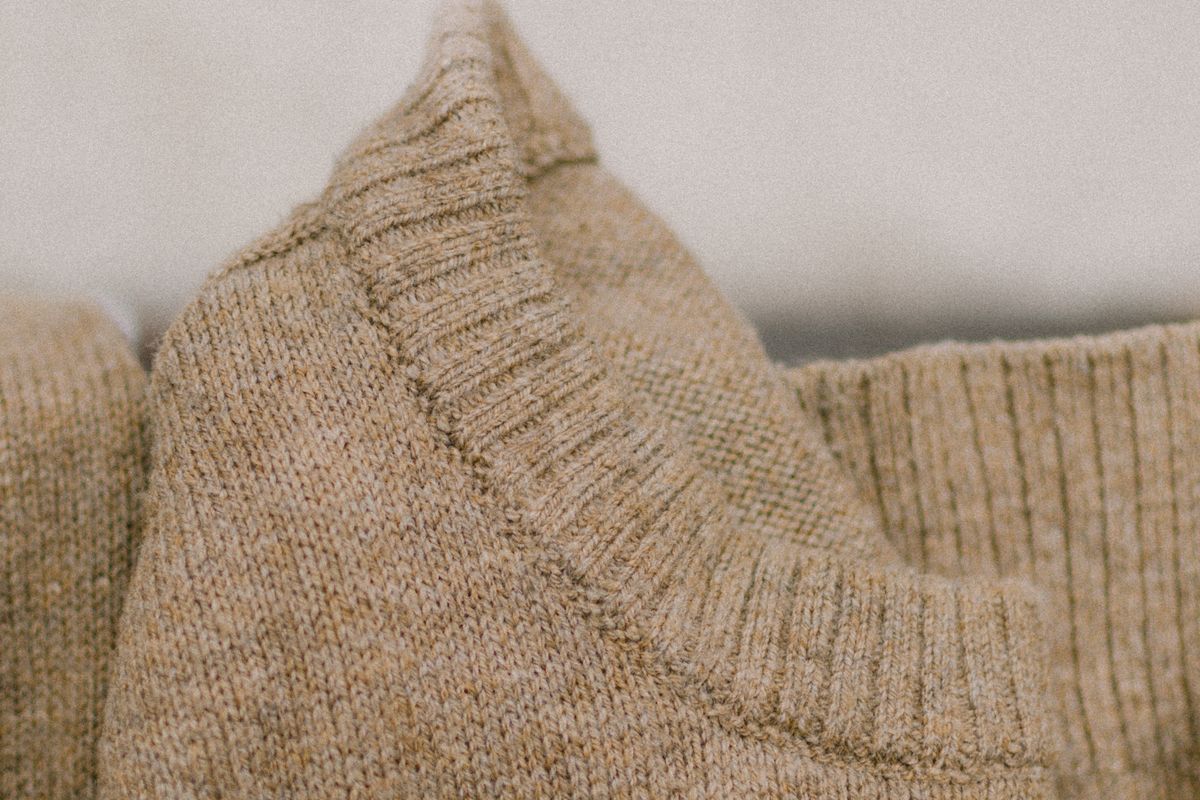
“100% cashmere” is a species claim, not a durability claim. US law sets three requirements, and sales copy rarely counts them the same way (16 CFR 300.19): the fibre must be the dehaired undercoat of the cashmere goat, its average diameter must not exceed 19 microns, and no more than 3% of the fibres, by weight, may exceed 30 microns. The same rule caps the coefficient of variation around that average at 24%, so a batch cannot pass on a low mean alone. Two sweaters can carry the label and behave nothing alike.
What ply actually counts
Ply is the number of single yarns twisted together to make the yarn that gets knitted. One strand is 1-ply; two strands twisted around each other is 2-ply. At the same finished weight, 2-ply holds its shape better and resists pilling, because the twist locks fibre ends into the structure instead of letting them migrate to the surface. 1-ply cashmere is less durable and more likely to develop holes.
The caveat matters more than the rule. Ply multiplies whatever quality the fibre already has. A 4-ply yarn made from short, coarse fibre is still short, coarse fibre, just thicker. Ply is a multiplier, not a grade.
Gauge, and the warmth-to-weight trade
Gauge is the number of stitches or rows per inch, and it describes how tightly the piece is knitted; sweaters are commonly knit at 7, 9 or 12 gauge. Seven gauge is open and light. Twelve gauge is dense, gives a smoother surface and uses more yarn per square inch, making it warmer and more durable for a given yarn. Identical fibre content can feel unrelated because gauge decides how much air the knit traps.
Fibre staple length predicts pilling
Staple length is how long the individual fibres are, in millimetres, and it is the number the label omits. Longer fibres have fewer loose ends and take longer to work out of the yarn. Grades are often quoted A to C: finest typically 36 to 50 mm, mid-grade around 30 to 40 mm, budget under 30 mm. Short fibre recovered from dehairing and carding waste is cheap and pills early.
Micron count sets the other half. The 14 to 15.5 micron band is the softest and the most fragile; around 16 to 18 microns is where softness and durability overlap. Nothing above 19 microns may legally be called cashmere, so softer is not automatically better.
A brand that publishes micron, staple length and ply is telling you it can trace its yarn. A brand that publishes none of them is telling you something too.
The numbers worth asking for
Three figures are enough to judge a sweater before it arrives: average fibre diameter in microns, average staple length in millimetres, and yarn construction stated as ply and gauge, ideally with finished weight in grams. If a brand cannot answer those, assume a 12-gauge 2-ply crew is really a thinner single-ply or a shorter-staple yarn. If the piece already pills, pilling by month six covers the mechanism, and why coat sleeves fail first takes those fibre questions into outerwear. The rest of the figures a product page should carry are set out in how to read a spec sheet.
FAQ
- Does higher ply mean better cashmere?
- No. Ply adds strength and shape retention, but it multiplies whatever fibre quality sits underneath. A four-ply yarn made from short, coarse fibre still behaves like short, coarse fibre.
- What micron count should I look for in cashmere?
- Around 16 to 18 microns is the band where softness and durability overlap. Under 15.5 microns is the softest grade and the most fragile; above 19 microns the fibre falls outside the US legal definition of cashmere.
- Why does my 100% cashmere sweater pill?
- Because 100% cashmere guarantees the fibre species and a diameter ceiling, not the staple length. Short fibres work loose of the yarn, entangle and ball up on the surface.
Maya Ellis
Writes about garment construction, leather goods and footwear specs. Started in retail floor management before moving to editorial research. How we research.