Coat Sleeves for Petite Frames: The Numbers That Matter
Coat sleeve length is measured from the centre back neck or the shoulder seam. Here is how petite frames can shop the number that fits.
Reviewed by Maya Ellis · Updated Sep 15, 2026
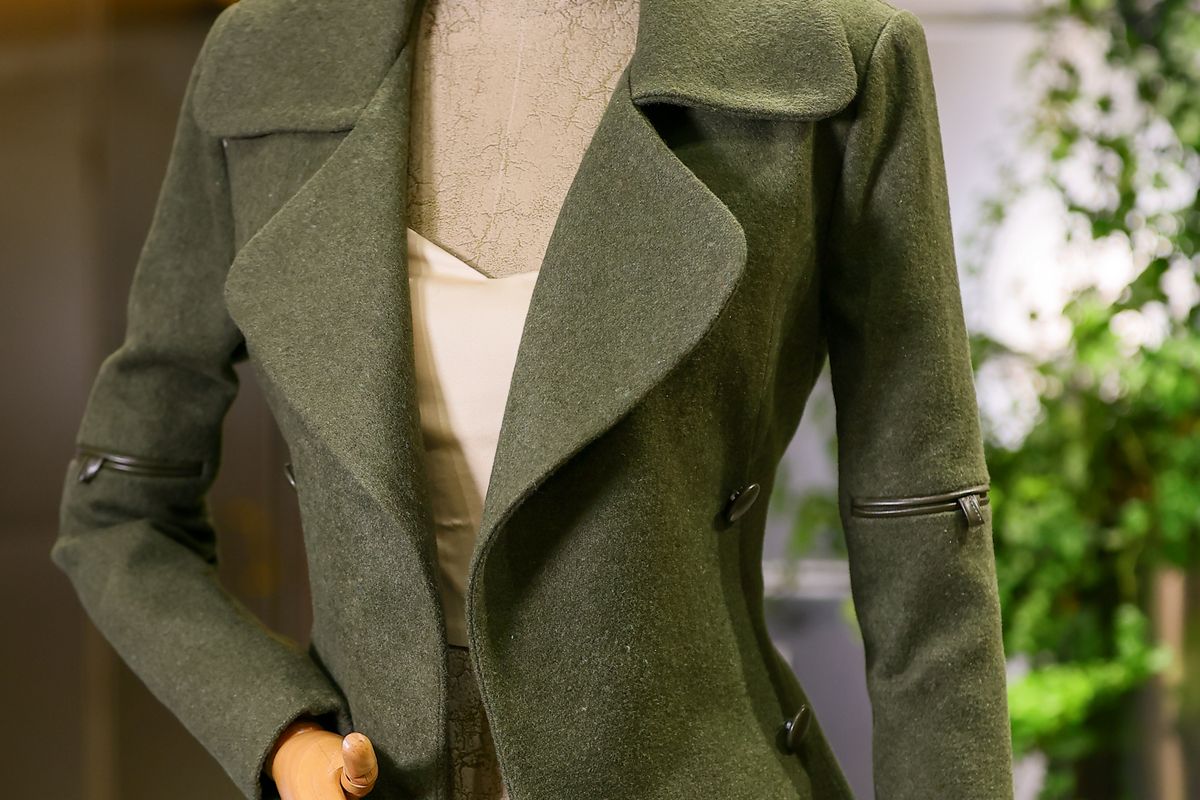
A coat sleeve is one number with two definitions, and petite shoppers get caught in the gap. The dress-shirt convention measures from the centre back of the neck, across the shoulder and down to the wrist bone, where a women’s coat or tailored jacket is often quoted around 30 to 33 inches. The jacket convention measures from the shoulder seam straight down the outside of the arm, where the same sleeve reads roughly 23 to 24 inches.
Reading a size chart without knowing the method
If a listing says “sleeve length” and nothing else, look at the magnitude of the number. Anything 30 inches or longer is almost certainly centre back to wrist; anything in the 20s is shoulder seam to wrist. The gap is the travel across the back of the neck and over the shoulder, so it widens with shoulder width: about 7 to 9 inches, which is why a 32-inch sleeve and a 24-inch sleeve can describe the same arm. A figure published without its method cannot be compared with another brand’s.
What petite sizing actually changes
Petite is a proportion cut, not a shorter version of a regular. Widths stay close to the regular size; vertical placement changes. Across published guides, petite sleeves run roughly 1.5 to 2.5 inches shorter, back length shortens by about 1 to 1.5 inches, and the armhole is cut higher and slightly smaller so the upper arm is not swimming in fabric. Shoulders sit narrower and the waistline rises, so seams land at your natural waist rather than below it.
That is why shortening a regular coat is not the same as buying petite. A tailor can take length off a sleeve. They cannot easily raise an armhole, narrow a shoulder or lift a waistline two inches. A shortened regular keeps its original proportions; a petite garment was drafted for a shorter frame from the pattern out.
Measuring a coat you already own
Take a coat that fits at the sleeve, lay it flat, smooth the sleeve without stretching it, and measure straight down the outer edge from the shoulder seam to the cuff edge. That is an arm length, the second convention, and it is the number to shop by. If a brand publishes only centre-back figures, measure a shirt that fits from the bone at the base of the neck to the wrist bone and compare like with like.
The tailoring trap at the cuff
Shortening from the cuff is the cheap route until the sleeve has a button placket or a vent. Published alteration lists show the jump: a simple sleeve shortening starts around £40, while redoing the vent and buttonholes starts around £50. US guides place a plain hem at roughly $20 to $75 against $60 to $180 once cuffs and buttons are involved. Shortening from the shoulder preserves the original cuff detail but is the pricier operation, quoted from around £65 in the UK and $165 and up in New York.
Two things to know before committing. Removing length below the buttons can leave them too close to the cuff edge, so a good tailor moves them. And sleeve alterations are one-way work: the fabric you cut away is gone. Measure against the shoes and the layer you will wear under the coat, because a glove and a sweater change where the cuff should land. The sleeve is also the first part of a coat to show wear, as why coat sleeves fail first explains, and a 12-piece workwear capsule applies the same wear-arithmetic to everything else you rotate.
FAQ
- Why does my coat sleeve measurement differ between brands?
- Because brands disagree on where the tape starts. Some measure from the centre back of the neck, others from the shoulder seam, and the two numbers differ by roughly 7 to 9 inches on the same arm, since only one of them includes the span across the back of the neck and over the shoulder.
- What else changes on a petite coat besides sleeve length?
- Armholes are cut higher and slightly smaller, shoulders are narrower, back length is shortened and the waistline is raised, so the seams land on a shorter frame instead of being trimmed to it.
- Is it cheaper to shorten a coat sleeve from the cuff or the shoulder?
- The cuff route is generally cheaper, but if the sleeve has a button placket or a vent, rebuilding those details pushes the price up. Shortening from the shoulder preserves the cuff but costs more.
Maya Ellis
Writes about garment construction, leather goods and footwear specs. Started in retail floor management before moving to editorial research. How we research.